
For FCA-regulated firms
From everyday tickets to FCA-ready evidence.
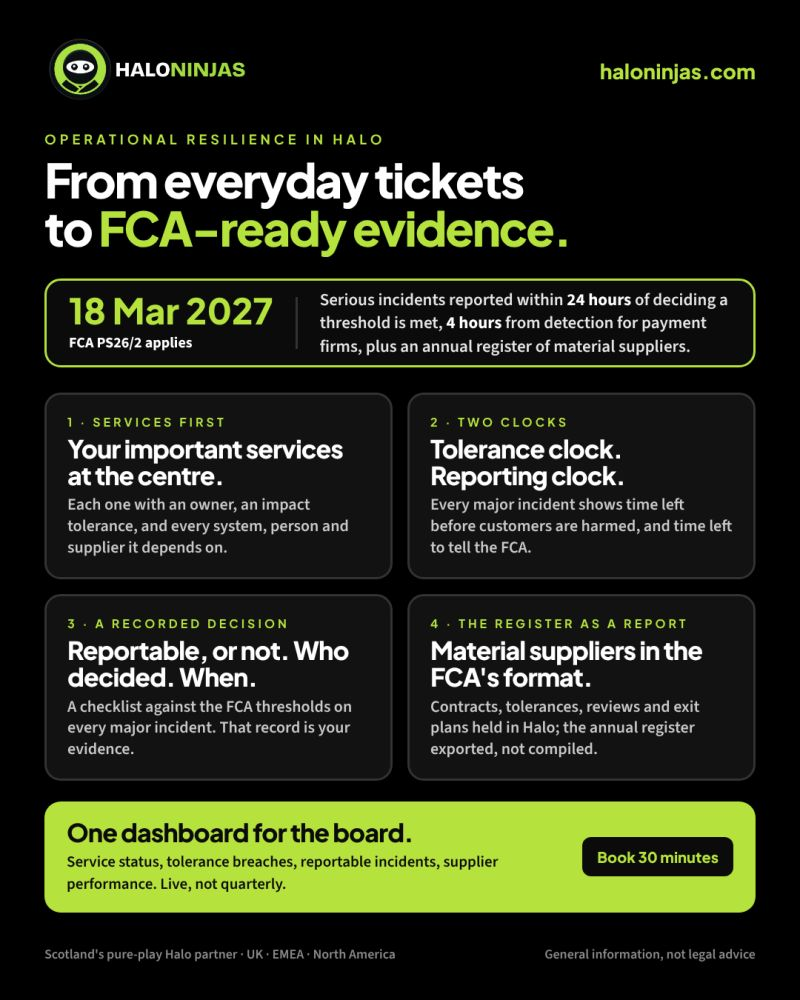
Halo, set up by HaloNinjas so your important business services, impact tolerances, incident clocks and third-party register come out of the work your teams already do.
Reportable- Important business serviceCard payments
- Impact tolerance1h 42m of 4h
- FCA reporting clockRunning from detection
- Third party involvedMaterial supplier
- 18 Mar 2027PS26/2 applies
- 24 hto report, from deciding a threshold is met
- 4 hfor payment firms, from detection
- Annualregister of material suppliers
SYSC 15A has been fully in force since 31 March 2025.
Why now.
- 0131 Mar 2025
Transition ends
Firms must remain within impact tolerances.
- 0218 Mar 2026
PS26/2 published
Incident and third-party reporting rules confirmed.
- 0318 Mar 2027
Reporting applies
Incident reports and the material third-party register.
Two reporting tiers
Serious incidents are reported within 24 hours of deciding a threshold is met; payment firms have 4 hours from detection. Material suppliers go on an annual register.
What a supervisor will ask to see
- Your important business services and their owners
- Impact tolerances and evidence you stay within them
- How you decided whether an incident was reportable
- Your material third parties and exit plans
- Scenario tests and what changed afterwards
The model.
Once everything links to a service, resilience evidence is a filter, not a project.
How it works in Halo.
Services
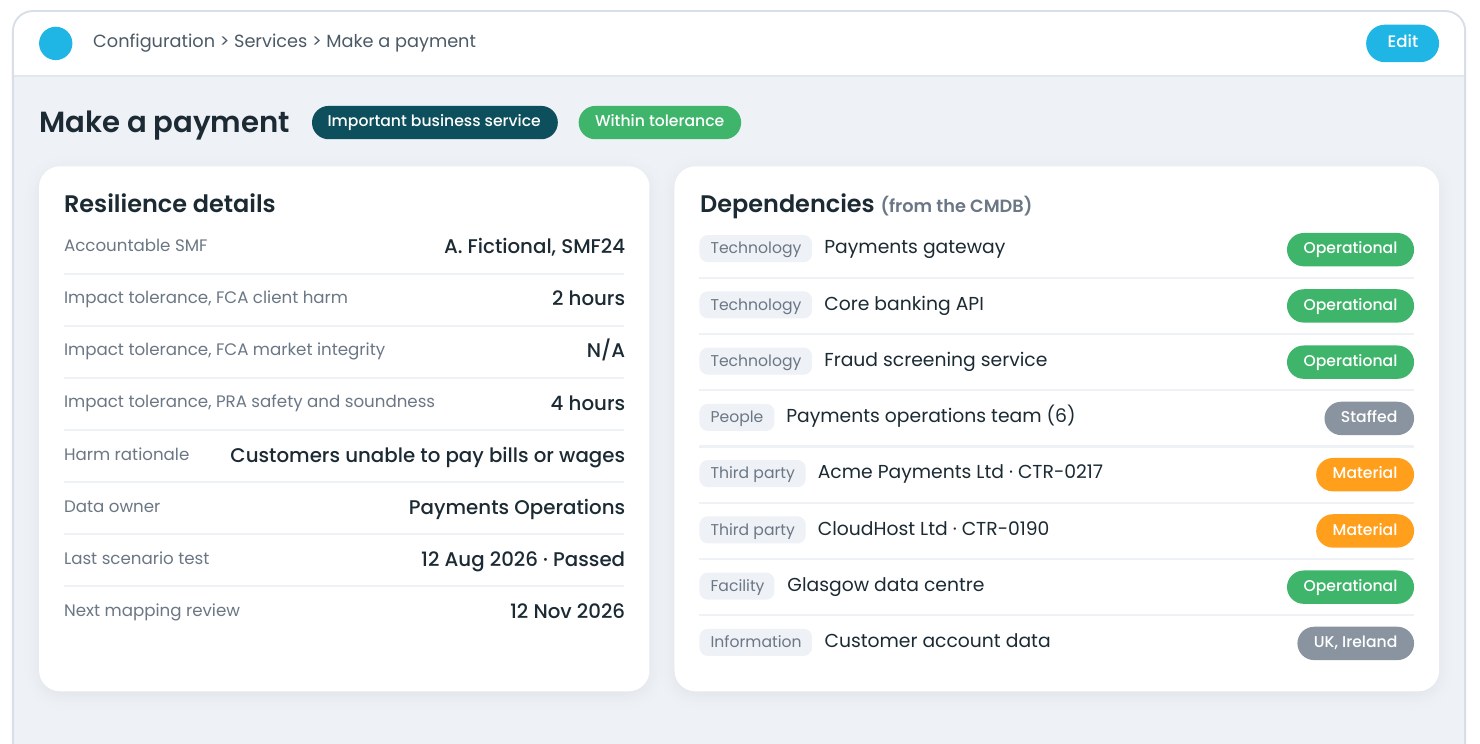
- Six tolerance fields on every important business service
- Dependencies linked from the CMDB
- Owner and review dates on the record
Incidents
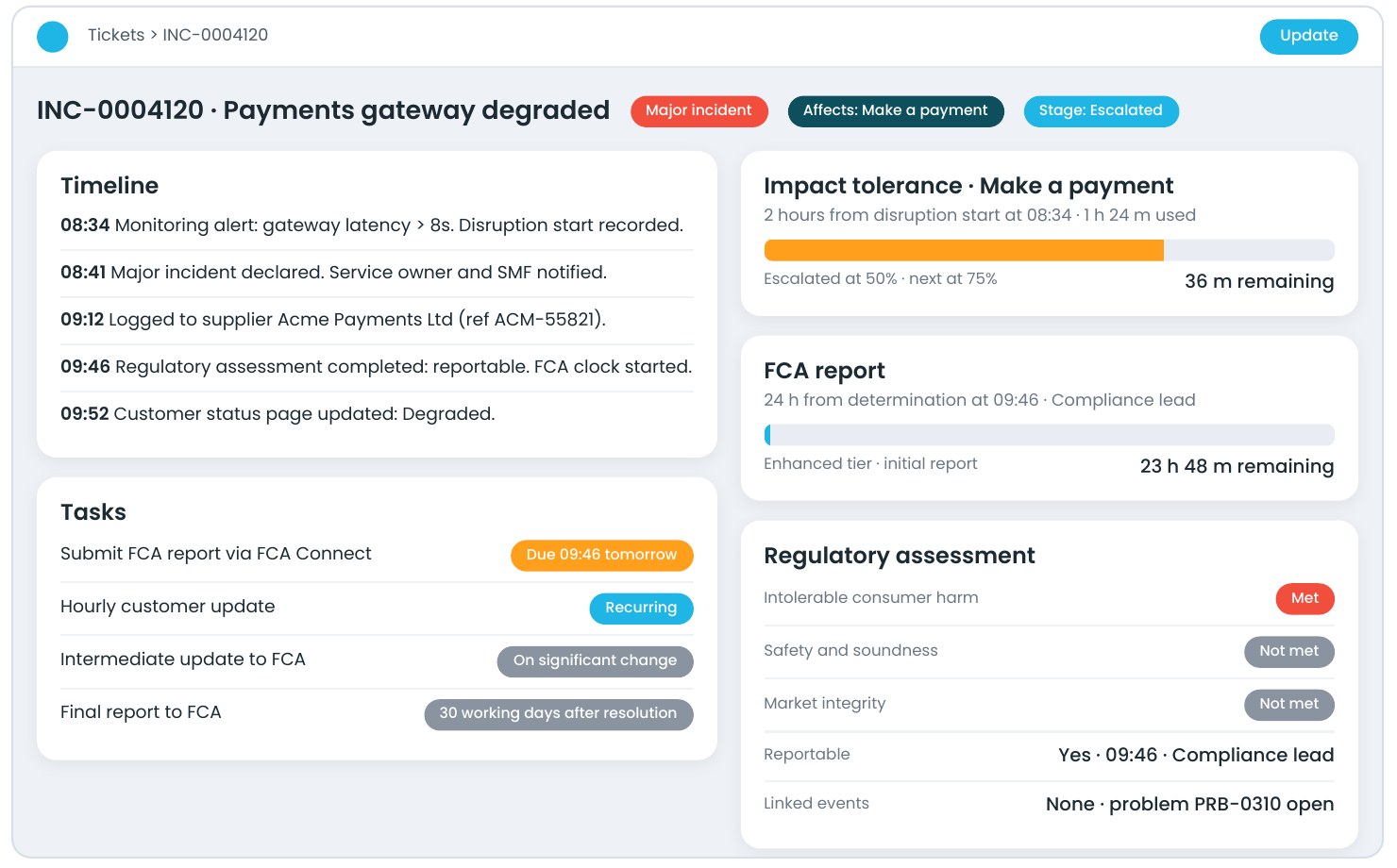
- Two clocks: impact tolerance and FCA reporting
- The reportability decision is recorded, with who made it
- Your firm decides and submits; Halo holds the record
Changes and suppliers
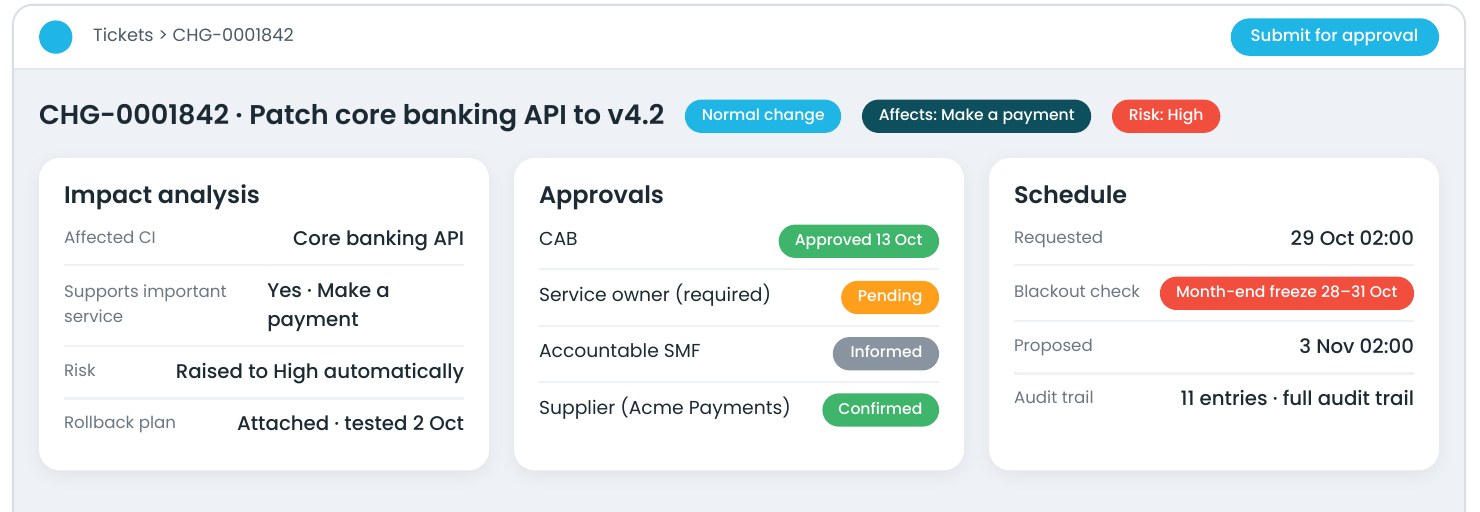
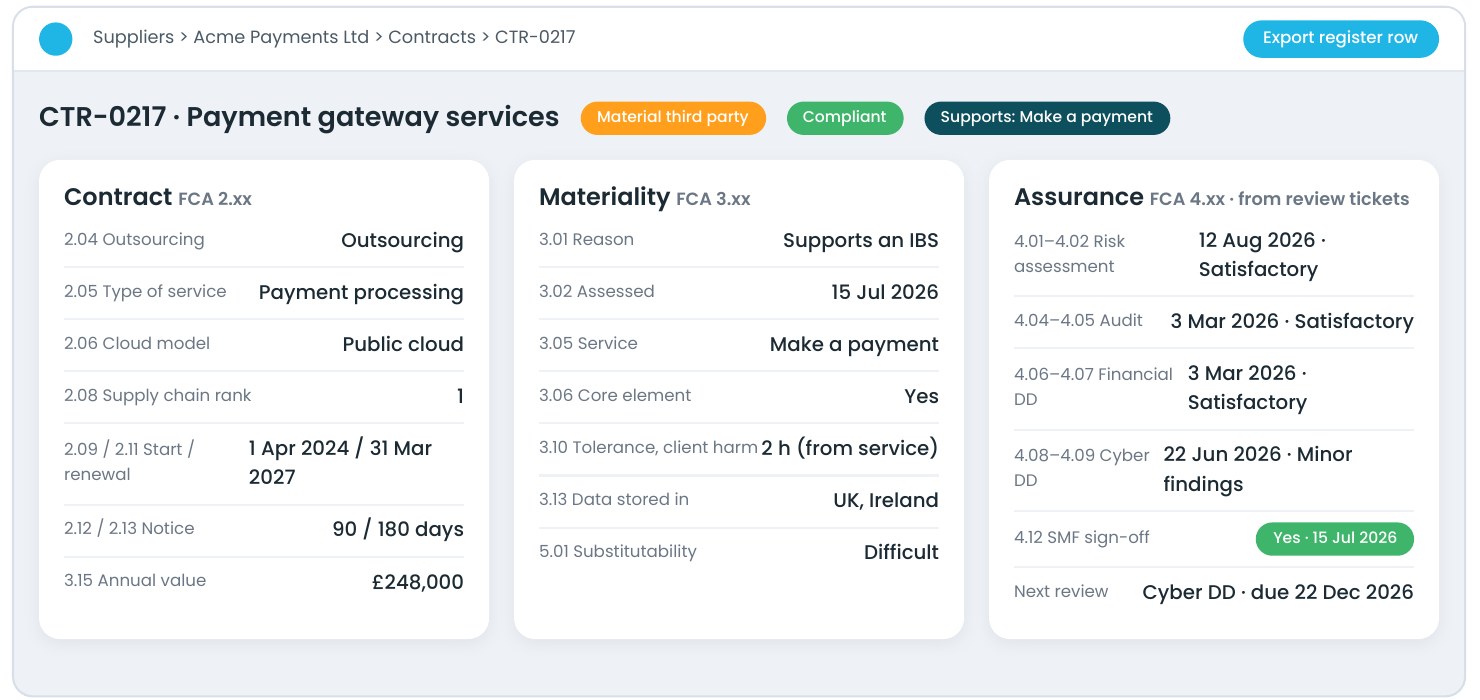
- Changes show which important services they touch
- Contract records carry the FCA register fields
- The material third-party register is a filtered report
The board view
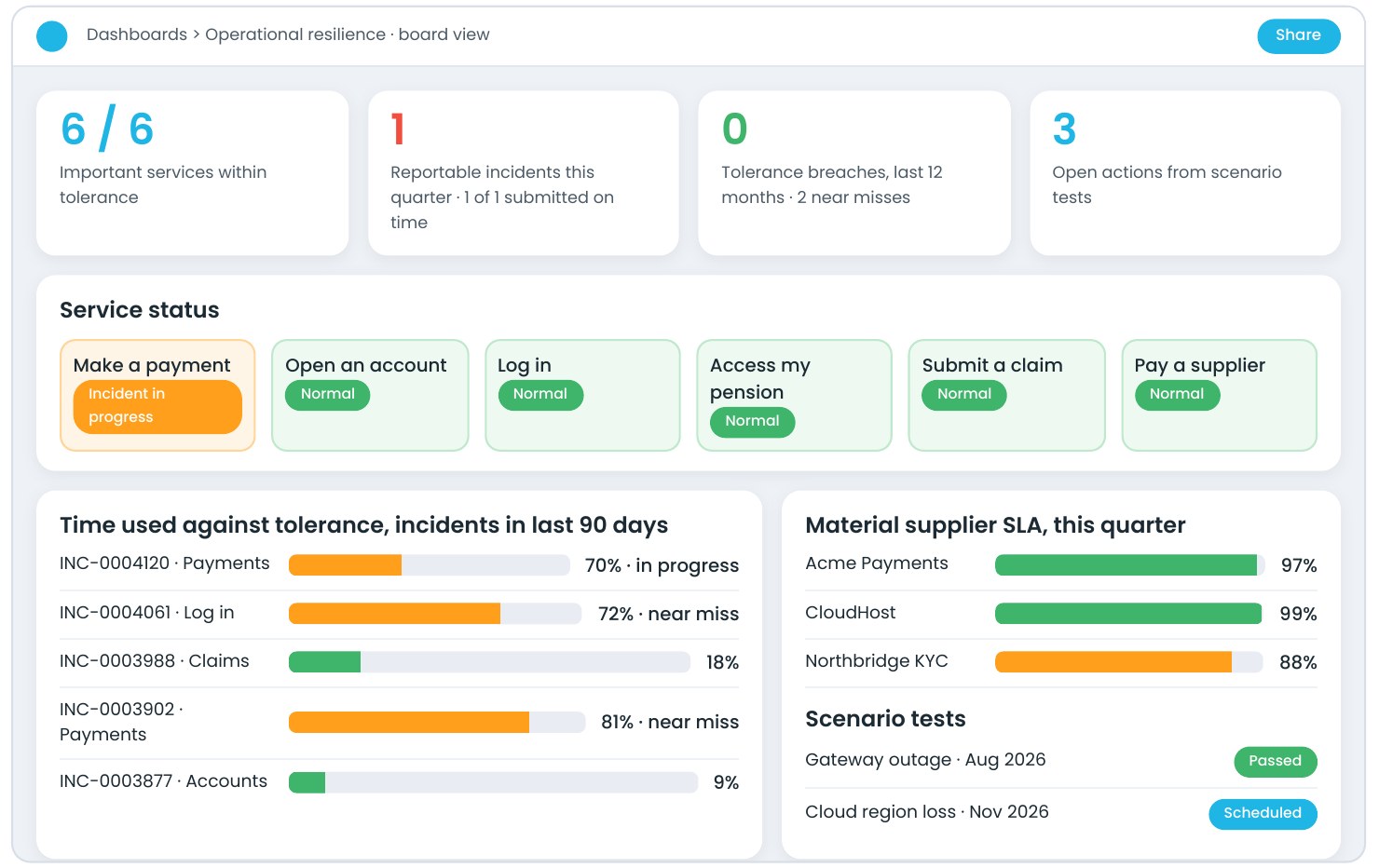
- One view for Senior Managers and the board
- Built from the same records the teams work in
- Evidence for the self-assessment, without a separate project
What changes for your teams.
| Team | Before | With Halo |
|---|---|---|
| Risk and resilience | Tolerances in a spreadsheet, evidence assembled before each review | Tolerances on the service record, evidence from live data |
| IT operations | Incidents logged without the service or the clock | Every incident linked to a service, with both clocks running |
| Compliance | Reportability decided by email and chased by phone | A recorded decision with who made it and when |
| Procurement | Supplier list held apart from the services it supports | Contract records carrying the register fields |
| Senior Managers and the board | A quarterly pack, out of date when it lands | A live dashboard from the same records |
How we deliver.
Two phases before March 2027 if you start by December.
Discovery workshop
Priority. Important business services, tolerances and owners agreed.
Service model and CMDB
Services linked to the systems, people and suppliers they depend on.
Incident, problem and change
Priority. Clocks, regulatory assessment and change risk on every record.
Suppliers, testing and dashboards
The third-party register, scenario tests and the board view.
Why HaloNinjas.
A pure-play Halo partner: Halo is all we implement. Founded in Perth, Scotland, with teams in London, Manchester and Manila, and founders from enterprise service management.
 Specialised Halo PartnerHaloITSM certified. Listed in Halo's partner directory.
Questions we get asked.
Does Halo submit the report to the FCA?
Which tier are we?
Can we do this on our existing Halo instance?
Does it cover DORA for EU entities?
How long does it take?
See it on your own services.
A 30-minute session on your important business services, with one of the founders.
General information, not legal advice.
Screens are product mock-ups, not final screenshots.
HaloITSM is a product of Halo Service Solutions.
